Football Goal Kick Rules: The Complete Guide (Law 16)
A goal kick is awarded when the whole of the ball crosses the goal line — on the ground or in the air — having last touched a player of the attacking team, and no goal is scored. The defending team restarts play by placing the stationary ball anywhere inside the goal area (the six-yard box), and the ball is in play as soon as it is kicked and clearly moves. All opponents must stay outside the penalty area until the ball is in play. Two facts surprise most fans: yes, you can score directly from a goal kick, and no, there is no offside straight from a goal kick. This guide covers the full goal kick procedure under IFAB Law 16, the 2025/26 updates — including the five-second countdown for time-wasting — and the mistakes that give away free kicks.
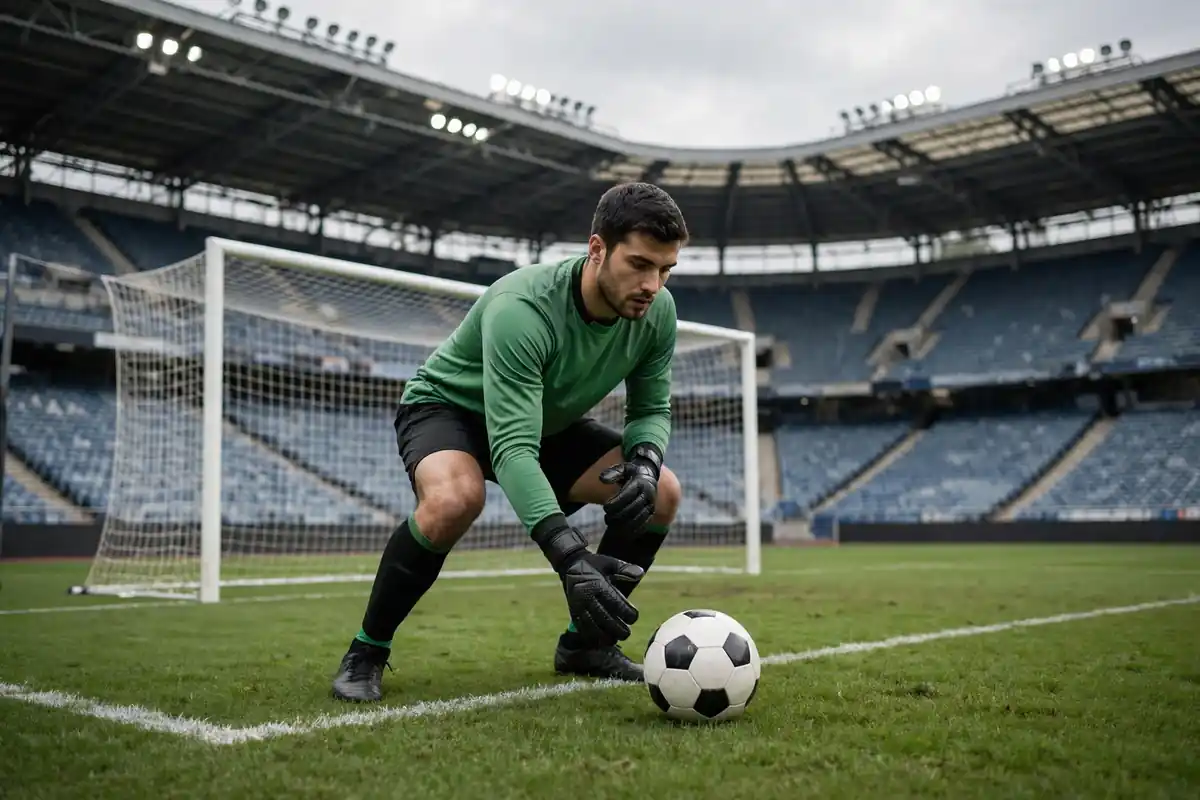
When Is a Goal Kick Awarded?
A goal kick is one of football’s standard restarts, and the trigger is very specific. The referee awards one when:
- The entire ball crosses the goal line (between the posts or across the full width of the pitch end)
- It was last touched by an attacking player
- No goal was scored
Think of it as the mirror image of a corner kick: ball out over the goal line off an attacker means a goal kick; off a defender means a corner.
If you are new to the game, our football basic rules for beginners guide covers all the restarts in plain language.
The Goal Kick Procedure: Step by Step
Law 16 sets out a simple procedure. Here is exactly how a goal kick must be taken:
- Ball placement. The ball must be stationary and placed anywhere inside the goal area — the six-yard box. It does not have to be on the six-yard spot or on the side where the ball went out; any point within the goal area is legal.
- Who takes it. Any player of the defending team may take the kick — in practice it is almost always the goalkeeper.
- Ball in play. The ball is in play the moment it is kicked and clearly moves. It no longer has to leave the penalty area first (that old requirement was removed in 2019).
- Opponents’ position. All opponents must remain outside the penalty area until the ball is in play. If an opponent has not had time to leave the area when the kick is taken quickly, the referee allows play to continue — the attacker cannot be punished for being too slow to retreat.
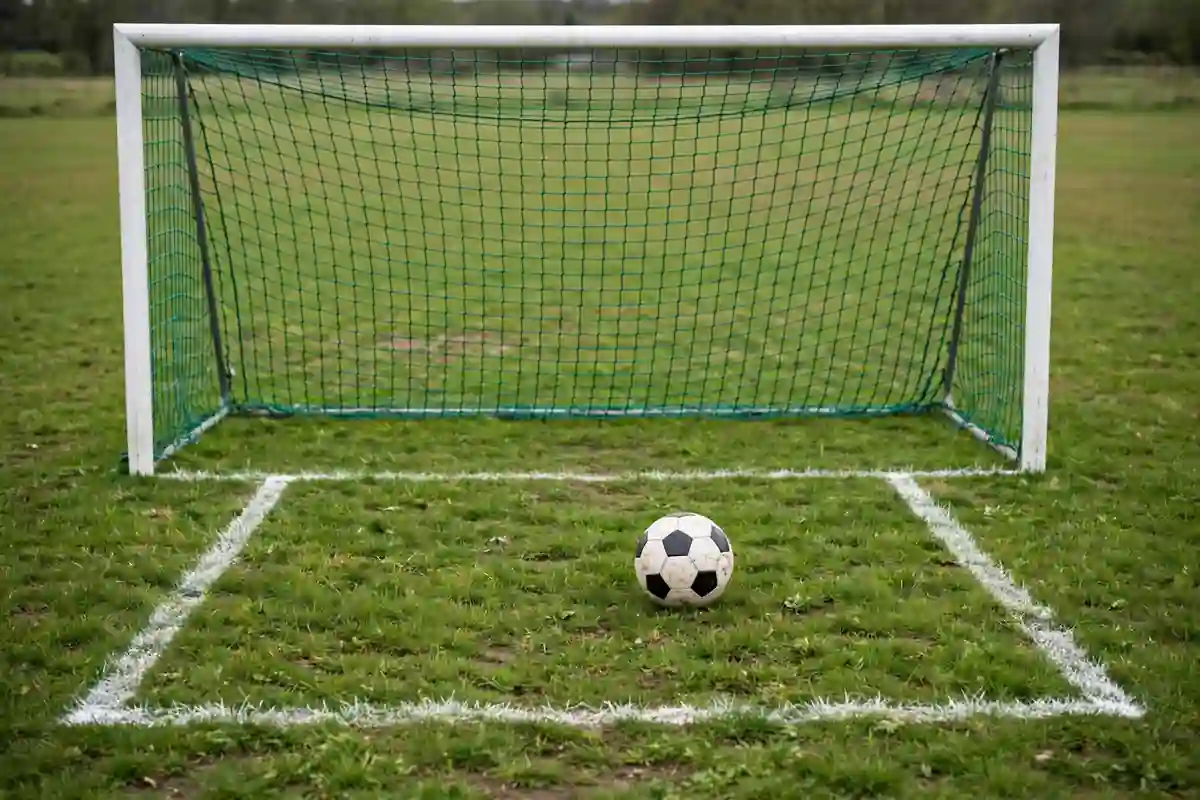
What happens if an opponent interferes?
- If an opponent inside the penalty area (or entering it early) touches or challenges for the ball before it is in play, the goal kick is retaken.
- If a foul occurs after an early entry, the kick is retaken and the offender may be cautioned or sent off.
- For any other infringement of Law 16, the kick is retaken.
New Goal Kick Rules for 2025/26: The 5-Second Countdown
The most talked-about update is the crackdown on time-wasting. Under the 2025/26 Laws:
- If a player unfairly delays a goal kick, the referee blows the whistle and starts a five-second countdown, counting down visibly with a raised hand.
- If the kick has not been taken in time, a corner kick is awarded to the opponents.
- The offender is cautioned only if they excessively delay the restart after the corner is awarded.
Goalkeepers who used to stroll to the edge of the box and rearrange the ball three times now have a very visible clock ticking.
The Goal Kick Offside Rule: Why There Is No Offside
Here is the rule that confuses even experienced fans: there is no offside offence directly from a goal kick.
Law 11 (offside) explicitly lists three restarts from which a player cannot be penalised for offside: the goal kick, the throw-in, and the corner kick. So when the goalkeeper launches a long goal kick and a striker collects it behind the defensive line, the flag stays down — legally.
Why does this exception exist? A goal kick is taken from deep inside the defending team’s own half, so the “gaining an advantage” concern that offside polices barely applies at the moment of the kick. Note the fine print, though — the exemption covers only the first touch directly from the kick. If a teammate heads the long goal kick onward to a third player in an offside position, normal offside rules apply from that second touch.
Our guide on throw-in rules covers the second of the three offside exemptions.
Can You Score Directly From a Goal Kick?
Yes — but only against the opposing team. A goal may be scored directly from a goal kick without the ball touching anyone else. On a windy day, a goalkeeper’s massive clearance can genuinely sail over the opposing goalkeeper and in.
The strange edge case: if the ball goes directly into the kicker’s own goal, no own goal is awarded — a corner kick is given to the opponents instead. The Laws deliberately prevent a team from scoring an own goal straight from its own restart.
Common Goal Kick Offences and Punishments
| Offence | Restart / Punishment |
|---|---|
| Kicker touches the ball a second time before another player touches it | Indirect free kick to the opponents |
| Kicker deliberately handles the ball | Direct free kick (penalty if inside the kicker’s penalty area; indirect free kick if the kicker was the goalkeeper) |
| Opponent inside the area touches or challenges for the ball before it is in play | Goal kick retaken |
| Unfair delay in taking the kick | 5-second countdown, then corner kick to opponents |
| Ball not stationary, or taken from outside the goal area | Goal kick retaken |
The double-touch rule catches goalkeepers out: the keeper takes the kick, the ball hits a divot and rolls back, the keeper instinctively grabs it — that is an indirect free kick to the opposition.
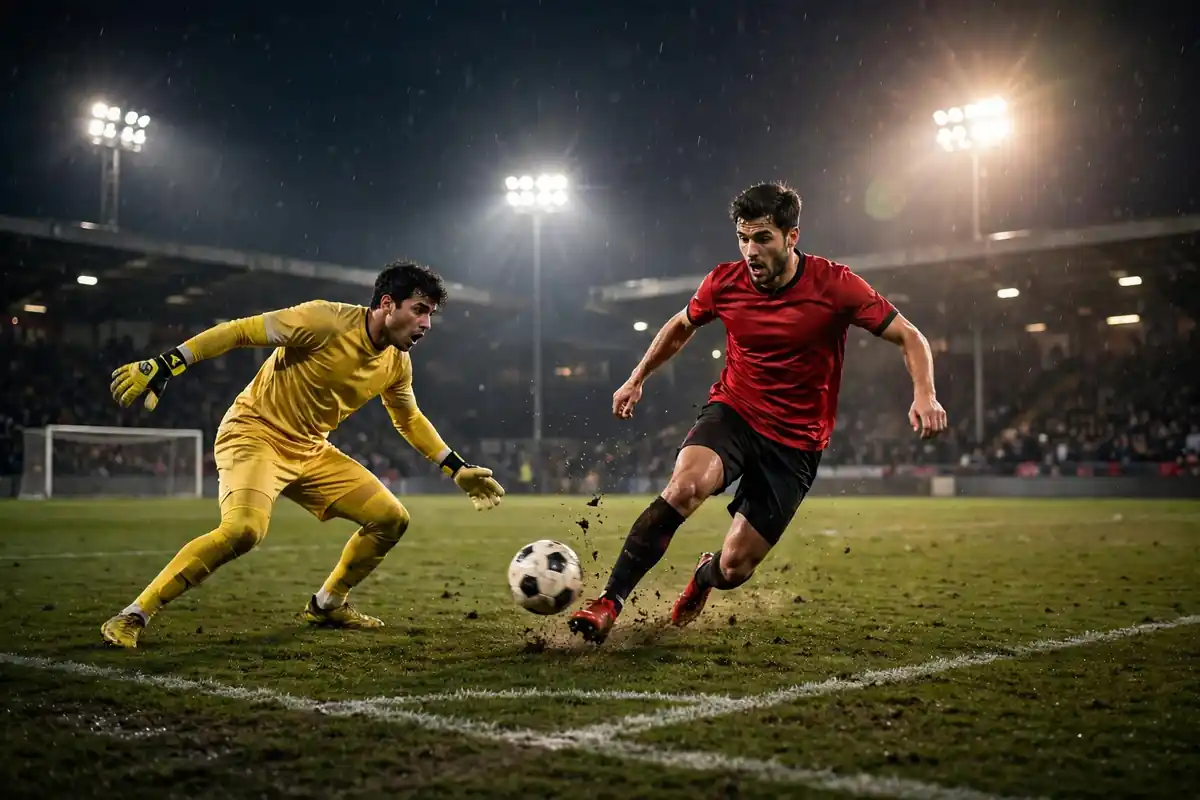
Goal Kick vs Corner Kick vs Throw-In
These three restarts are easy to mix up:
- Goal kick: ball out over the goal line off an attacker → defending team restarts from the six-yard box → opponents outside the penalty area → no offside.
- Corner kick: ball out over the goal line off a defender → attacking team restarts from the corner arc → no offside.
- Throw-in: ball out over the touchline → opponents’ throw from the touchline → no offside, but no direct goal.
All three share the offside exemption — a favourite quiz question. You will find more rules quizzes on the GameGuidelines homepage.
Real Match Case Study: The Short Goal Kick Revolution and a Night to Forget
The modern goal kick was reshaped in June 2019, when IFAB removed the old requirement that the ball leave the penalty area before being in play. Manchester City were the first elite team to fully exploit it: from the opening weeks of the 2019/20 season, Ederson began rolling short goal kicks to centre-backs standing just yards away inside his own box, turning the restart into the first pass of an attack. Opponents, conditioned by decades of retreating to the edge of the area, suddenly had to press inside the box or concede a free man. It was a vivid demonstration that a small change in Law 16’s procedure could rewrite tactics across world football.
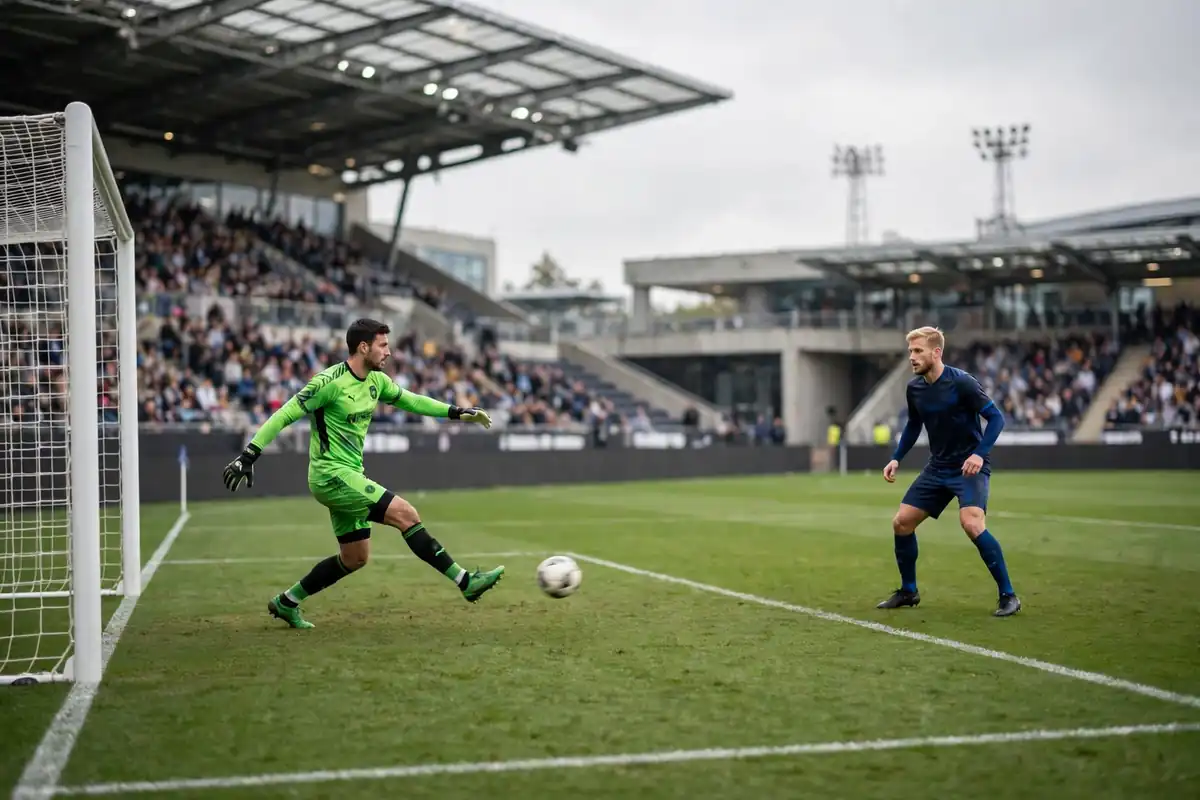
But playing out from the back carries exactly the risks Law 16 warns about. On 7 February 2021, Liverpool goalkeeper Alisson Becker endured one of the most infamous distribution collapses in Premier League history against Manchester City at Anfield. With the score at 1–1, Alisson’s attempted pass out from the back went straight to Phil Foden, who set up Ilkay Gündogan to make it 2–1. Minutes later he did it again — this time finding Bernardo Silva, whose cross was headed home by Raheem Sterling. City won 4–1. While those were open-play clearances rather than goal kicks themselves, they illustrate the identical danger: once the ball is kicked and clearly moves, it is live, opponents may challenge, and a misplaced restart deep in your own half is punished instantly. It is why the double-touch and handling rules exist — and why goalkeepers are coached to put a bad ball into the stands rather than risk the catastrophic second touch.
Frequently Asked Questions
Does the ball have to leave the penalty area on a goal kick?
No — not since 2019. The ball is in play as soon as it is kicked and clearly moves, even inside the penalty area. That is why you now see centre-backs collecting short goal kicks a few yards from their own goalkeeper.
Can a goal kick be taken by someone other than the goalkeeper?
Yes. Law 16 says the kick is taken by “a player of the defending team” — any of them. Goalkeepers take it almost every time because of their kicking range, but nothing requires it.
Is it offside if a striker receives a goal kick behind the defence?
No. There is no offside offence when a player receives the ball directly from a goal kick (the same applies to throw-ins and corner kicks). Offside can only become relevant from the next touch onward.
What happens if the goalkeeper wastes time on a goal kick?
Under the 2025/26 rules, the referee starts a visible five-second countdown. If the kick is not taken in time, the opponents get a corner kick. A yellow card follows only if the player then excessively delays that corner.
Can the goalkeeper pick the ball up again after taking a goal kick?
Not before another player has touched it. A second touch means an indirect free kick to the opponents — or worse, a penalty if an outfield kicker deliberately handles inside the area. Let it go and trust your defenders.
Conclusion
The goal kick looks like the simplest restart in football — ball on the six-yard box, big kick upfield — but Law 16 rewards teams who understand its details: short kicks since 2019, the offside exemption that makes long kicks a genuine weapon, the fact that a goal can be scored directly, and now the five-second countdown that punishes time-wasting with a corner. Master these goal kick rules and you will read the game better every time your team restarts from the back. For the official wording, see the IFAB Laws of the Game, and keep exploring GameGuidelines — plain-language football rules, one law at a time.
