
What Is a Throw-In in Football? Rules, Technique and Common Mistakes
A throw-in is the way play restarts in football when the whole of the ball crosses the touchline — the long white lines running down each side of the pitch. It is awarded to the opponents of the player who last touched the ball, whether they kicked it out deliberately or by accident. The thrower must use both hands to throw the ball from behind and over the head, with part of each foot on or behind the touchline. It sounds simple, but the throw-in is one of the most frequently mis-taken restarts in the game, and getting it wrong hands possession straight to the other team. This guide covers the official throw-in rules under IFAB Law 15, the proper throw-in technique, the foul throw rule, and the common mistakes players make.
If you are new to the sport, you may also want to read our football basic rules for beginners guide first — it explains the 17 laws of the game in plain language.
How a Throw-In Is Awarded
The rule is straightforward. A throw-in is awarded to the opponents of the player who last touched the ball when the whole ball passes over the touchline, on the ground or in the air. Notice the word “whole”: the entire ball must cross the entire line. If even a sliver of the ball is still above the line, the ball is still in play.
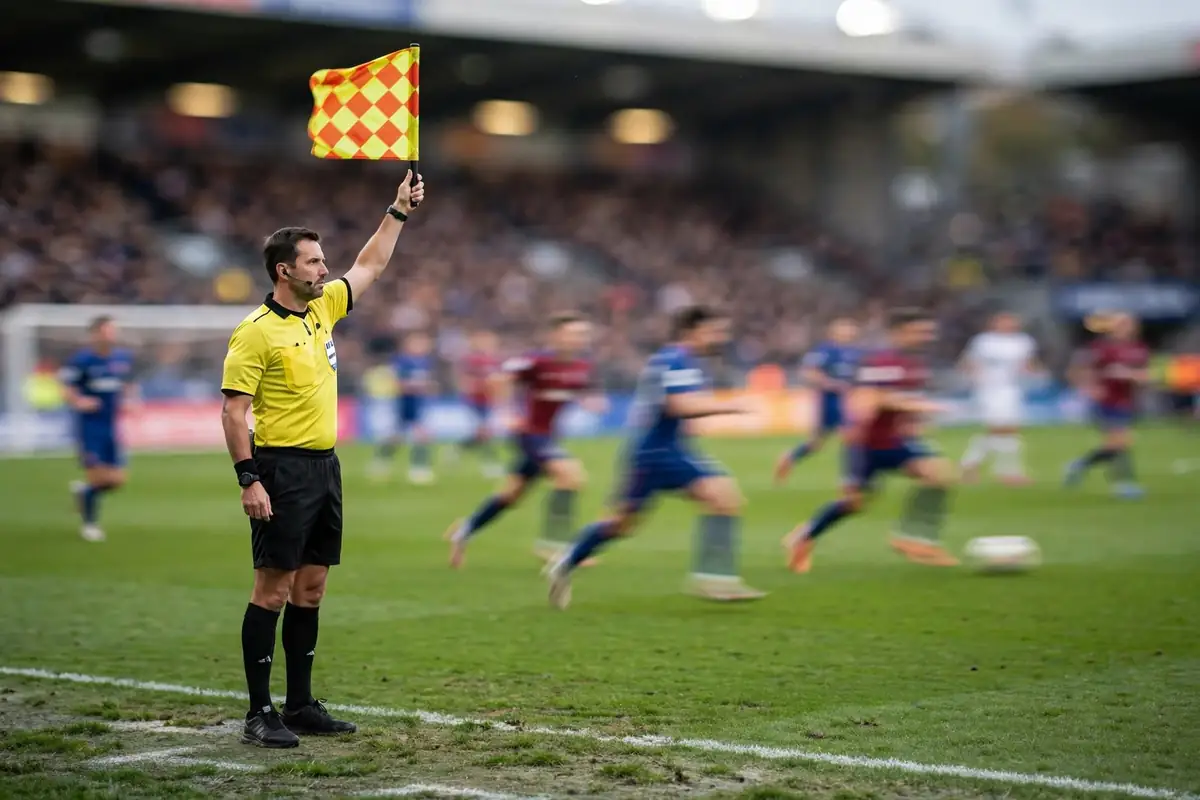
On the sideline, the assistant referee signals by raising the flag toward the team taking the throw. Usually the nearest player takes it, though some teams use a designated long-throw specialist. A throw-in can also be awarded as punishment if a player deliberately delays taking one for their team.
The Correct Throw-In Procedure Under Law 15
Under IFAB Law 15, at the moment of delivering the ball, the thrower must:
- Face the field of play. No behind-the-back or sideways trick throws.
- Have part of each foot on the touchline or on the ground outside it. Both feet must touch the ground at release — a running start is fine, but the feet must be planted.
- Throw with both hands from behind and over the head. One-handed flicks and side-arm throws are illegal.
- Take it from where the ball left the field. A step or two of leeway is usual; walking metres up the line can be penalised.
- Opponents must stay at least 2 metres (2 yards) from the take point.
- The ball is in play the moment it enters the field of play.

Proper Throw-In Technique
Rules aside, a good throw-in needs the right technique. Grip the ball firmly with both hands, fingers spread wide, and bring it behind your head — the legal starting position that also builds power. Plant both feet on or just behind the touchline and keep them grounded through the release. Drive forward from your core and let go at roughly 30 degrees above the horizontal, the angle researchers found gives maximum distance. Follow through toward your target without stepping onto the pitch early. A powerful long throw near the opponent’s box can work almost like a corner kick.
The Foul Throw Rule: Common Mistakes That Get Penalised
A “foul throw” is the informal name for a throw-in taken incorrectly. When it happens, the throw-in is awarded to the opposing team — an instant, avoidable turnover. These are the mistakes that cause it:
- Lifting a foot off the ground — the most common foul throw at every level; part of each foot must touch the ground at delivery.
- Stepping over the touchline — a foot fully inside the field at release is illegal; feet must be on the line or outside it.
- One-handed or side-arm throws — flicks and slings are foul throws, however casual the game.
- Not starting from behind the head — throws launched from the forehead or beside the ear break the “behind and over” rule.
- Taking it from the wrong spot — wandering well from where the ball crossed the line can be penalised.
- Feinting, then leaving it to a teammate — can earn a yellow card for delaying the restart.
Two special cases confuse people. If the ball touches the ground before entering the field — but the throw was legal — it is not a foul throw: the same team retakes it. And the thrower must not touch the ball again before another player does; throwing it to yourself gives the opponents an indirect free kick (see our direct vs indirect free kick guide), or a direct free kick if the second touch is handball. Opponents, meanwhile, must respect the 2-metre distance — crowding or distracting the thrower can earn a yellow card for unsporting behaviour.
Can You Score Directly From a Throw-In?
No. A goal cannot be scored directly from a throw-in:
- If the ball goes directly into the opponents’ goal, a goal kick is awarded to the defending team.
- If the ball goes directly into the thrower’s own goal, a corner kick is awarded to the opposition. (Our corner kick rules guide explains what happens next.)
The key word is “directly”: if any other player touches the ball on its way in, the goal counts. That is why long throws into a crowded penalty area are so dangerous — one flick-on makes it legal.
The Throw-In Offside Rule
Here is a quirk smart attackers love: there is no offside offence when receiving the ball directly from a throw-in — you can stand behind the last defender, collect the throw, and run clean through on goal. It is one of only three restarts where offside does not apply (goal kicks and corner kicks are the others), and it turns throw-ins into genuine attacking weapons against a high defensive line.
Can the Goalkeeper Pick Up a Throw-In From a Teammate?
No. A goalkeeper cannot handle a ball thrown directly by a teammate — it is treated like the back-pass rule, and handling it inside the penalty area gives the opponents an indirect free kick. That is why keepers let a teammate’s throw roll past and play it with their feet instead.
Throw-In Rules Cheat Sheet
- Whole ball over the touchline = throw-in to the opponents of whoever touched it last
- Face the field, feet on or behind the line and on the ground
- Both hands, from behind and over the head, from where the ball went out
- Opponents at least 2 metres away
- Ball is live as soon as it enters the field
- No goal directly from a throw-in (goal kick or corner kick instead)
- No offside directly from a throw-in
- Foul throw = throw-in goes to the other team
- Thrower cannot touch it again before someone else does
The full text of the law is published by football’s lawmakers — see Law 15: The Throw-In on the IFAB website for the official wording.
Real Match Case Study: The Throw-In as a Weapon
Between 2008 and 2013, Stoke City turned the humble throw-in into one of the most feared set pieces in the Premier League — thanks to Rory Delap. The Irish midfielder, a former schoolboy javelin thrower, could hurl the ball 30 to 40 metres with a flat, bullet trajectory that dropped inside the six-yard box. For opponents, a Stoke throw-in near the corner flag was effectively a corner kick: Delap’s throws rained into the penalty area, defenders struggled to clear under pressure, and Stoke scored goal after goal from the chaos. Their 2–1 win over Arsenal in November 2008 — when Delap’s throws repeatedly terrorised the Arsenal defence — announced the tactic to the world.

Delap’s success was built on perfect Law 15 technique, repeated hundreds of times: both feet planted on or behind the touchline at the moment of release, the ball delivered with both hands from behind and over the head. Because there is no offside from a throw-in, Stoke’s attackers could crowd the goalkeeper legally; because a goal cannot be scored directly, every Delap missile needed only the slightest flick-on to become a goal. It is the ultimate proof that the throw-in’s “boring” rules — feet down, two hands, over the head — are exactly what make the restart fair even when weaponised. And it answers the question every fan asks watching those throws: yes, it was all completely legal, every single time.
Frequently Asked Questions
What is a throw-in in football in simple terms?
A throw-in is how the game restarts when the ball goes out of play over the sideline (touchline). A player throws the ball back into play with both hands from behind the head, and the throw goes to the team that did not touch the ball last.
What is a foul throw?
A foul throw is a throw-in taken in breach of the procedure — for example, lifting a foot, stepping onto the pitch, or throwing one-handed. The punishment is simple: the throw-in is awarded to the opposing team.
Can you be offside from a throw-in?
No. A player cannot be penalised for offside when receiving the ball directly from a throw-in, even if they are standing behind the last defender. This exception has existed since 1920.
Can you score directly from a throw-in?
No. If the ball enters the opponents’ goal directly from a throw-in, a goal kick is given. If it enters the thrower’s own goal directly, a corner kick is given. If any other player touches the ball first, a goal can be scored normally.
Do both feet have to be on the ground for a throw-in?
Yes — part of each foot must be in contact with the ground, either on the touchline or on the ground outside it, at the moment the ball is delivered. Lifting a foot during the throw is the single most common cause of a foul throw.
Conclusion
The throw-in looks like football’s simplest restart, but Law 15 is precise: face the field, feet down on or behind the line, both hands from behind and over the head, from the right spot. Avoid the classic foul-throw mistakes, remember the two big exceptions — no direct goals, no offside — and you will understand throw-ins better than most players on the pitch.
Written by the GameGuidelines Team — we explain the IFAB Laws of the Game in plain, simple language for players, coaches and fans. Explore more rules at GameGuidelines.
