Football Players’ Equipment Rules: IFAB Law 4 Fully Explained
Before a single ball is kicked, the referee runs an inspection that most fans never notice: shirts, shorts, socks, shinguards, boots, jewelry, undershirts. Everything a player wears onto the pitch is governed by Law 4 of the IFAB Laws of the Game — Players’ Equipment. It is one of the shortest laws, yet it decides everything from why goalkeepers wear different colours to why a captain can be booked for wearing the wrong armband.
This guide explains the full equipment rules: what is compulsory, what is banned and why, how the referee enforces it, and what happens when kit breaks, bleeds, or gets lost mid-match. For more guides like this, visit the GameGuidelines homepage — we are building the web’s friendliest football rules library.
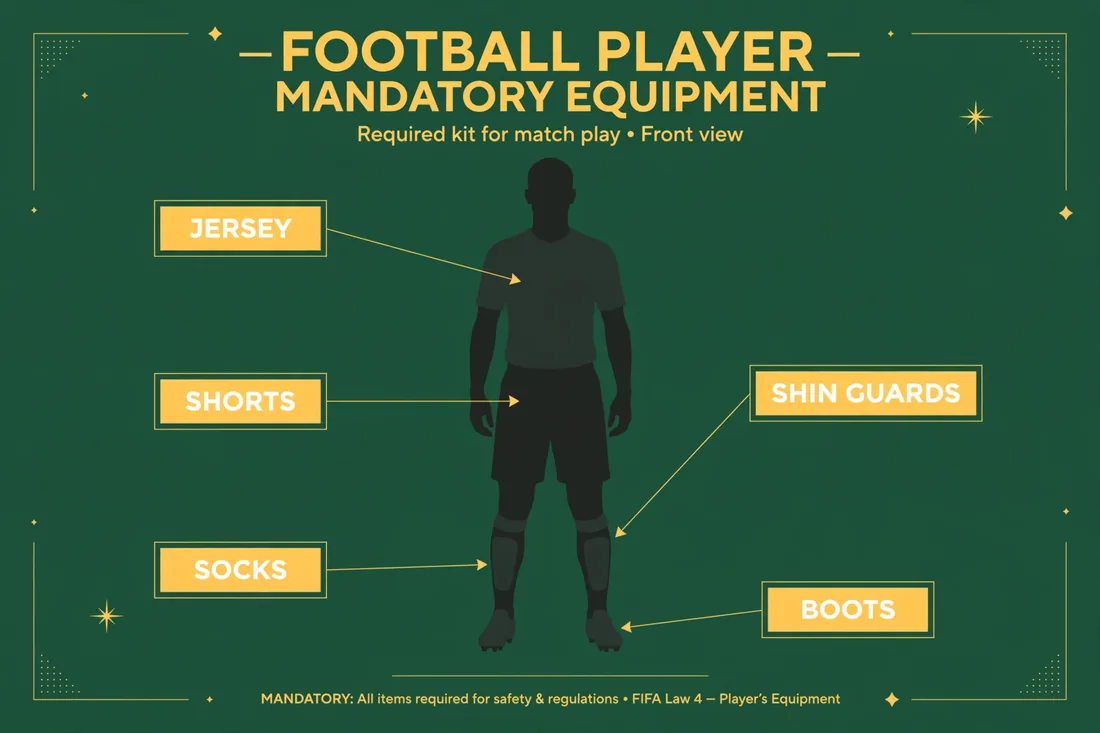
The Five Compulsory Items
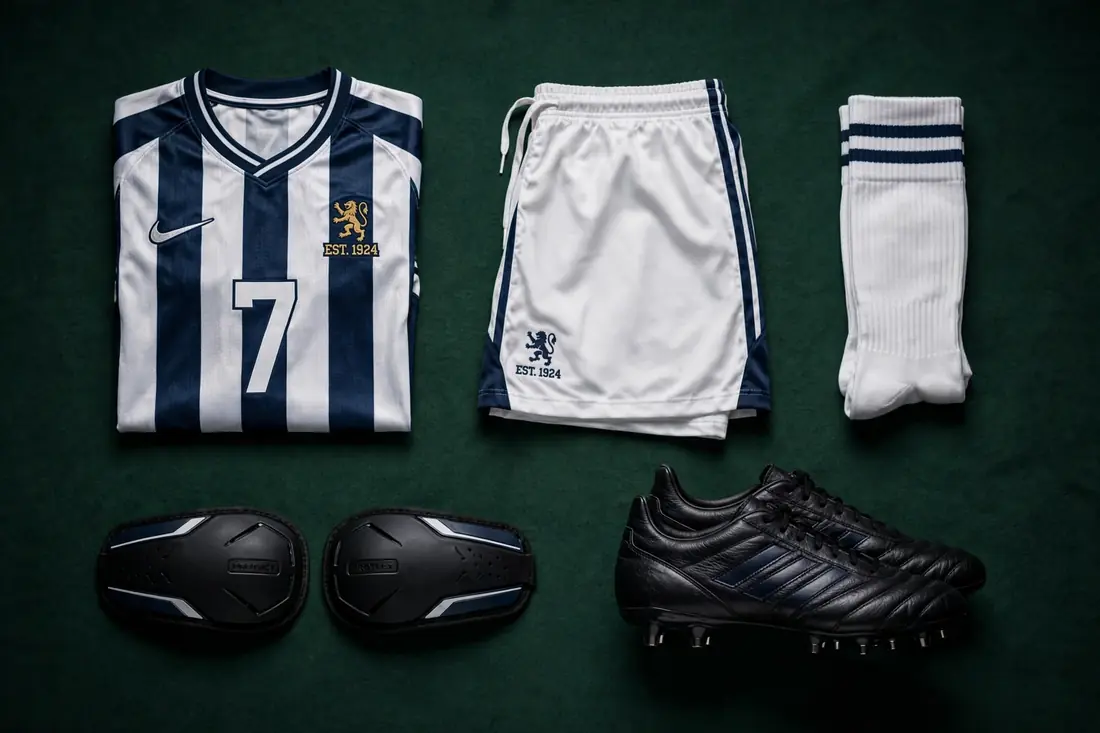
Law 4 is unambiguous: a player must not take part in a match without all five of the following:
- A jersey/shirt — with sleeves.
- Shorts — goalkeepers may wear tracksuit bottoms instead.
- Socks — which must fully cover the shinguards.
- Shinguards — made of a suitable material (rubber, plastic or similar) that provides reasonable protection, and worn under the socks.
- Footwear — football boots that are not dangerous to anyone on the pitch.
If any one of these is missing, the player cannot play until it is corrected. A player who tries to take the field without shinguards, for example, will simply be sent back to the dressing room. Our deep dive into shin guard rules in football covers exactly what counts as legal protection and how referees judge it, while our football boot rules guide explains what makes footwear legal — from stud length to sole materials.
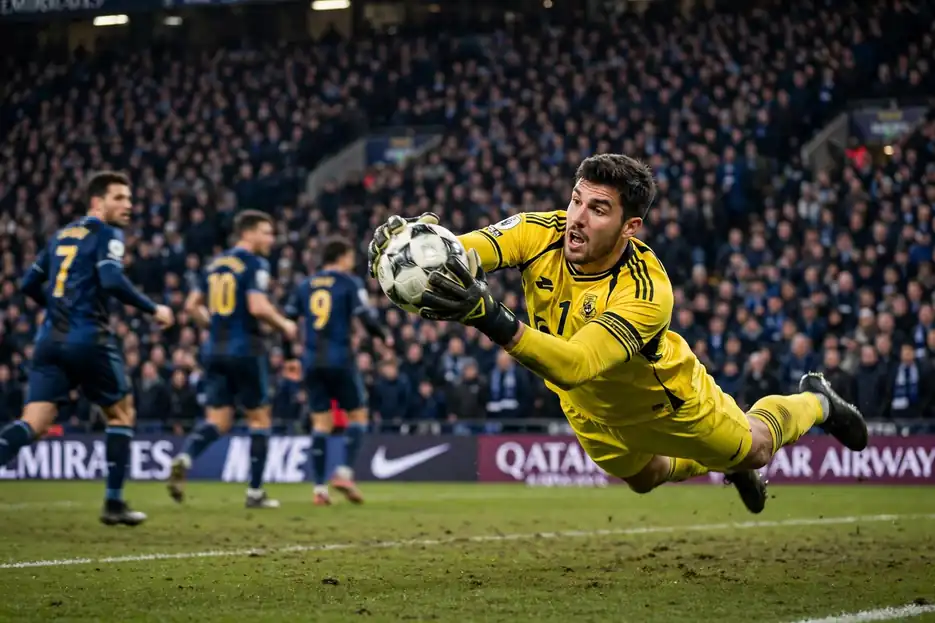
Goalkeepers Must Look Different
One of the most visible equipment rules concerns the goalkeeper. Law 4 requires the goalkeeper to wear colours that clearly distinguish them from the other players and the match officials. That is why you see keepers in neon yellow, bright orange, or vivid green while everyone else wears the team kit.
The rule exists for a practical reason: in a crowded penalty area, everyone — teammates, opponents, and the referee — must instantly recognise who is allowed to handle the ball. If a goalkeeper’s shirt clashes with an outfield player’s shirt, the referee can order the goalkeeper to change. At grassroots level, where teams often share one set of bibs, this usually means the keeper pulls on whatever odd-coloured shirt is available.
What Is Banned — and Why
Law 4 prohibits all items of jewelry: necklaces, rings, bracelets, earrings, leather bands, and rubber wristbands. The ban is absolute — and importantly, covering jewelry with tape does not make it legal. A taped wedding ring is still a wedding ring under the law, and the referee will order it removed.
The reasoning is safety. A ring can cut an opponent (or the wearer’s own finger) in a challenge; a necklace can snag; an earring can tear. Referees check for jewelry during the pre-match inspection, and players who refuse to remove an item cannot play. For the full story on what players may and may not wear, see our guide to jewelry rules in football.
Beyond jewelry, the law bans any equipment that is dangerous to the player or anyone else. That includes:
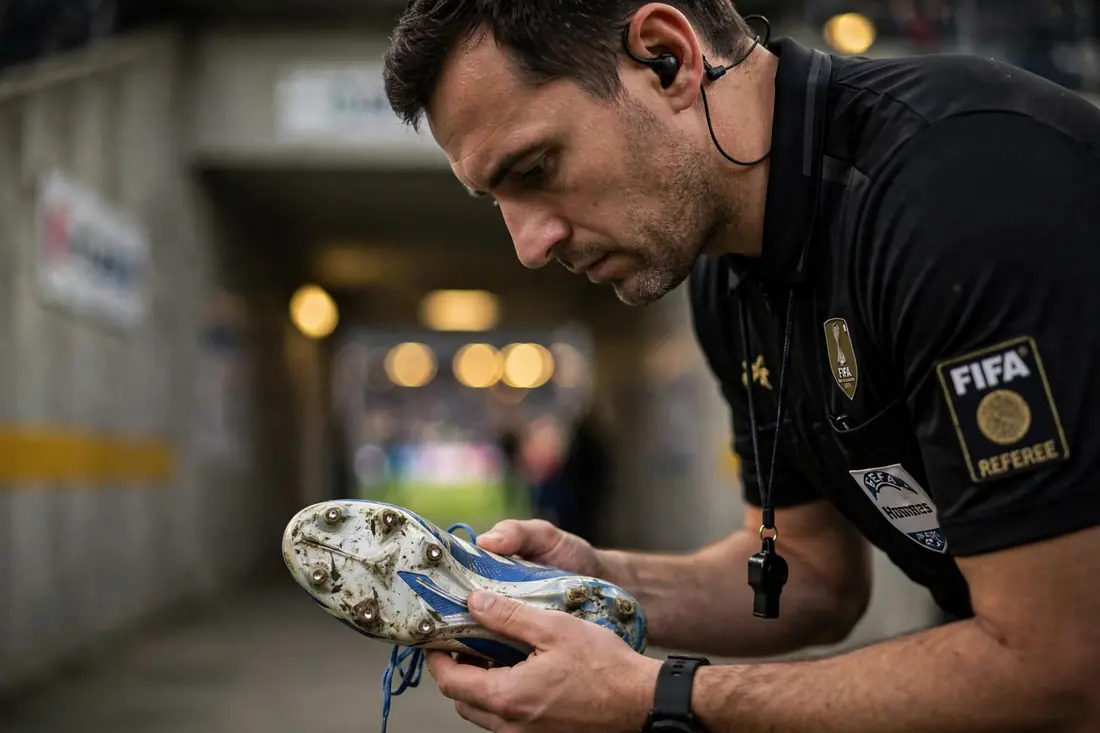
- Boots with sharp or protruding studs (referees routinely run a finger along studs during inspection).
- Hard casts or rigid braces, unless fully padded and judged safe by the referee.
- Spectacles with glass lenses or sharp frames — though modern sports glasses with shatterproof lenses are generally accepted.
Non-dangerous protective equipment is allowed, provided it is made of soft, lightweight, padded material. This covers items like padded headgear, soft facemasks worn after facial injuries, and knee or elbow protectors. The referee has the final say on whether any item is safe.
The Referee’s Equipment Inspection
The referee (or an assistant) inspects every player’s equipment before the match and may re-check during it. The standard routine at professional level happens in the tunnel: studs checked for sharpness, jewelry spotted, shinguards confirmed under socks, undershirt colours verified.
If a player’s equipment is found to be incorrect or missing:
- The player is told to leave the field of play to correct it.
- They may only return when the ball is out of play, and with the referee’s permission, after the referee (or an assistant) has verified the correction.
- A player who returns without permission is cautioned (yellow card).
- A player sent off the field to fix equipment who then re-enters without permission commits a cautionable offence.
This is not theoretical — it happens regularly. Players who lose a boot in a tackle must leave the pitch to put it back on (though they may continue playing briefly while the ball is in play — see the What If? section).
Undershirts, Tights, Tape, and Gloves
The fine print of Law 4 covers the layers beneath the kit:
- Undershirts must be the same colour as the main colour of the shirt sleeve. A player in a red shirt cannot wear a white long-sleeve undershirt.
- Undershorts and tights must match the main colour of the shorts (or the lowest part of the shorts if they are multi-coloured).
- Tape or similar material applied to socks must be the same colour as the part of the sock it covers — no more black electrical tape spiralled around white socks.
- Gloves are permitted for any player, not just goalkeepers. Outfield players sometimes wear them in freezing conditions.
These colour-matching rules exist so that the kit stays visually uniform — a defender’s undershirt should never confuse an opponent about where the shirt ends and the arm begins.
Slogans, Statements, and the Captain’s Armband
Equipment rules also govern what players display. Undershirts must not carry political, religious, or personal slogans, statements, or images. A player who reveals such a message — even in celebrating a goal — is sanctioned by the competition organisers, and the player’s team can face punishment too. The same applies to the outer kit: manufacturers’ logos are fine, but personal campaign messages are not.
The captain’s armband is the one permitted addition to the standard kit. It must be worn on the arm (traditionally the upper arm), and in FIFA and UEFA competitions it is often a standardised armband issued by the organisers. Wearing an unauthorised armband can draw a sanction — which is exactly what happened at the 2022 World Cup (see the case studies below).
Squad numbers are part of the equipment picture too: shirts must display the player’s number, and competitions require numbers to be clearly visible. Our guide to football kit number rules explains numbering traditions, from the iconic number 10 to retired shirts.
What Happens When Equipment Fails Mid-Match
Football is a contact sport, and kit breaks. Law 4 handles the common scenarios:
- A boot comes off: the player may continue playing briefly, but must replace the boot as soon as possible — ideally when the ball next goes out of play. They do not need the referee’s permission to put their own boot back on during play, but if they leave the field to do it, they need permission to return.
- A shirt is torn: minor tears are ignored, but a shirt torn badly enough to be a problem must be changed. The player leaves the field at a stoppage, changes, and returns with permission.
- Blood on the kit: a player who is bleeding must leave the field and may only return once the bleeding has stopped. A blood-stained shirt must be replaced — the player cannot come back wearing it. Modern protocol is strict; the famous blood-soaked shirts of the 1980s would never be allowed today.
- Shinguard slips out: the player should correct it at the next stoppage; playing on briefly is tolerated, but a referee who notices a missing shinguard will order the player off to fix it.
What If? Tricky Equipment Scenarios
What if a player’s boot flies off and the ball comes straight to them? They may play the ball in socks — there is no offence in kicking the ball without a boot. But they must put the boot back on at the earliest opportunity.
What if a goalkeeper wants to wear a cap? Allowed, as long as it is not dangerous. Keepers in low winter sun sometimes wear soft caps, and referees permit them.
What if two teams’ kits clash and there is no spare kit? The home team is usually required to change under competition rules. At grassroots level, one team wears bibs. The match cannot start until the referee is satisfied the teams are distinguishable.
What if a player refuses to remove a wedding ring? They cannot play. Tape does not legalise it. Some players wear silicone rings on the sideline, but on the pitch, no ring of any kind is permitted.
What if a player’s undershirt has a charity message? Even charitable slogans fall under the ban on personal statements. The player can be sanctioned, and the club may face a fine from the competition organiser.
What if a shinguard breaks in half during a tackle? The broken shinguard no longer provides protection, so the player must replace it. They leave the field at the next stoppage and return with the referee’s permission.
What if the goalkeeper’s shirt is the same colour as the referee’s? Law 4 requires the keeper to be distinguishable from the match officials too. The referee will ask the goalkeeper to change — usually the fourth official produces a spare keeper shirt.
What if a player wears glasses? Ordinary spectacles are risky and most referees will ask for them to be removed, but modern sports goggles with shatterproof lenses and a secure strap are generally accepted as non-dangerous.
Real-Match Case Studies
The OneLove armband standoff — 2022 FIFA World Cup, Qatar. On 21 November 2022, seven European federations — England, Wales, Belgium, Denmark, Germany, the Netherlands, and Switzerland — abandoned plans for their captains (including Harry Kane and Manuel Neuer) to wear the rainbow-themed OneLove armband after FIFA threatened on-field sporting sanctions, understood to mean yellow cards, for wearing unauthorised kit. Under Law 4 and FIFA’s equipment regulations, only approved equipment may be worn, and the federations said they could not expose their captains to bookings. Germany’s players responded before their opener against Japan on 23 November 2022 by covering their mouths in the team photo — a protest about being silenced, as the German federation put it. The episode showed that even the captain’s armband, the most traditional kit addition in football, is subject to strict equipment control.
Petr Čech’s headguard — Reading vs Chelsea, 14 October 2006. Barely a minute into the Premier League match at the Madejski Stadium, Chelsea goalkeeper Petr Čech dived at the feet of Reading’s Stephen Hunt and took Hunt’s knee full force to the head, suffering a depressed skull fracture that required emergency brain surgery at Oxford’s Radcliffe Infirmary. Three months later, Čech returned against Liverpool wearing a specially made protective headguard — and wore it for the rest of his career. Law 4 expressly permits non-dangerous protective equipment made of soft, lightweight material, and the headguard became the most famous example in world football: safety equipment that the laws welcome, not forbid.
Terry Butcher’s blood-soaked shirt — Sweden vs England, 6 September 1989. In a goalless World Cup qualifier at the Råsunda Stadium in Stockholm, England captain Terry Butcher clashed heads with Swedish striker Johnny Ekström early in the game, opening a deep cut on his forehead. Bandaged and stitched at half-time, Butcher played on as the wound kept reopening, finishing the match with his white England shirt soaked red. The 0–0 draw all but sealed England’s place at Italia 90, and the photograph became iconic. Under today’s Law 4 and concussion protocols, it could never happen: a bleeding player must leave the field, a bloodied shirt must be changed, and head injuries trigger mandatory assessment. Butcher himself later said he would not have been allowed to continue in the modern game.
Equipment Rules at a Glance
| Item | Rule |
|---|---|
| Jersey, shorts, socks, shinguards, footwear | All five compulsory — no play without them |
| Shinguards | Suitable material, fully covered by socks |
| Goalkeeper colours | Must clearly differ from players and officials |
| Jewelry | Banned entirely; tape does not legalise it |
| Undershirts / tights | Must match sleeve / shorts colour |
| Sock tape | Must match the sock colour it covers |
| Protective gear (headguard, facemask) | Allowed if soft, light, non-dangerous |
| Slogans on kit | Political, religious, personal messages banned |
| Captain’s armband | Permitted; must be authorised in FIFA/UEFA events |
| Bloodied kit | Player must leave; shirt must be changed |
Frequently Asked Questions
Can footballers wear jewelry during a match?
No. Law 4 bans all jewelry — rings, necklaces, bracelets, earrings — and covering it with tape does not make it legal. The referee will order any jewelry removed before the player is allowed on the pitch.
Why do goalkeepers wear different colours?
Law 4 requires goalkeepers to wear colours that distinguish them from the other players and the match officials, so everyone can instantly identify who is allowed to handle the ball — especially in a crowded penalty area.
What happens if a player’s boot comes off during play?
They may continue briefly and play the ball, but must put the boot back on as soon as possible. If they leave the field to fix it, they need the referee’s permission to return.
Are players allowed to wear undershirts?
Yes, but the undershirt must be the same colour as the main colour of the shirt sleeve, and undershorts or tights must match the shorts. This keeps the kit visually uniform.
Can a player be sent off for an equipment problem?
Not directly for the equipment itself, but a player who re-enters the field without the referee’s permission after being ordered off to fix equipment is cautioned — and two cautions mean a sending-off.
Why was the OneLove armband banned at the 2022 World Cup?
FIFA’s equipment regulations only permit authorised kit. FIFA threatened on-field sanctions (yellow cards) against captains wearing the unauthorised OneLove armband, so seven European teams withdrew it rather than risk bookings.
Do goalkeepers have to wear shinguards?
Yes — shinguards are compulsory for all players including goalkeepers. They must be made of a suitable protective material and worn under the socks.
Sources
- IFAB Laws of the Game — Law 4: The Players’ Equipment
- IFAB Laws of the Game — full document library
- FIFA Equipment Regulations
