Shin Guard Rules Football: Are They Compulsory? (FIFA Law 4 Explained)
Yes — shin guards are compulsory in football. Every player on the pitch, from Sunday league beginners to Champions League stars, must wear them. This is not a coaching tip or a recommendation. It is written directly into Law 4 of the IFAB Laws of the Game, the same law that makes your shirt, shorts, socks and boots mandatory. A player who refuses to wear shin guards cannot legally take part in the match.
Yet the rule raises plenty of questions. What counts as a legal shin guard, how big must it be, and does it really have to stay hidden under your sock? This guide covers the exact FIFA equipment rules: shin pad requirements for size and material, referee checks, and what happens if you lose one mid-game.
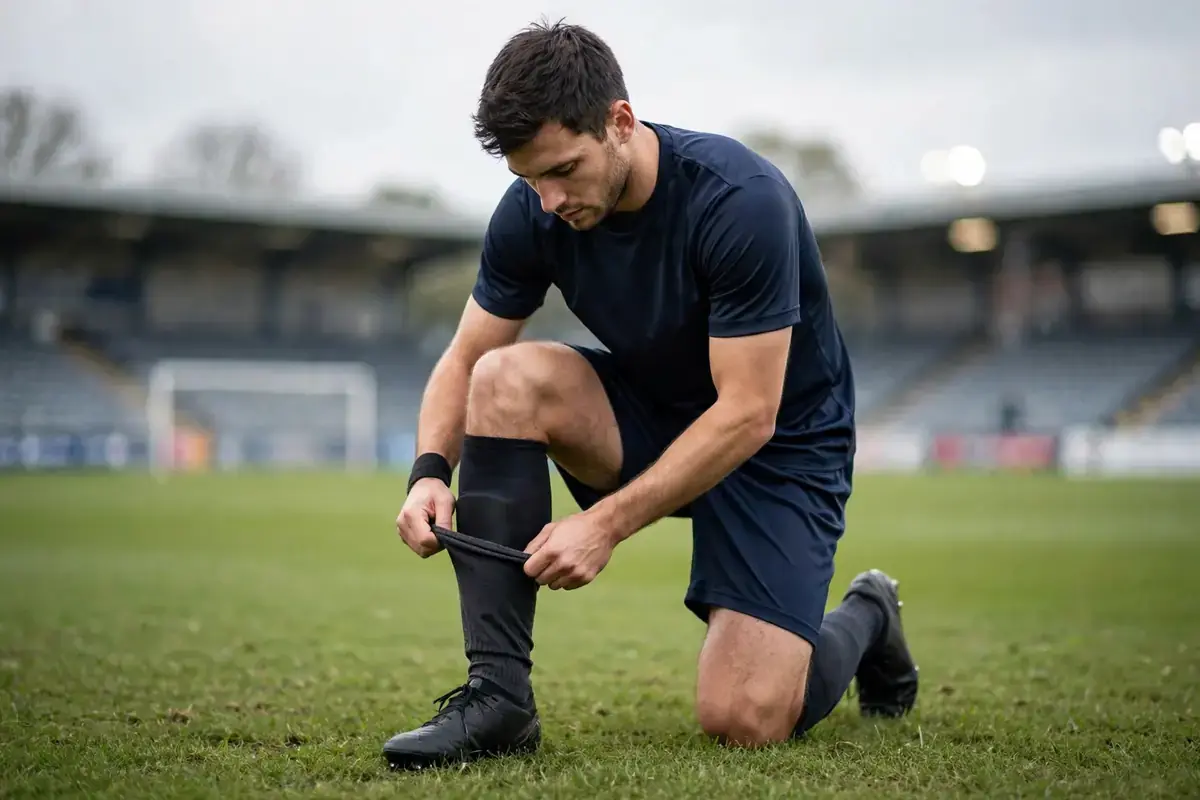
What FIFA Law 4 Says About Shinguards
Law 4, “The Players’ Equipment”, lists exactly five items of compulsory equipment. A player must have all five to play: a shirt with sleeves, shorts, socks, shinguards, and footwear.
The law then defines the shin pad requirements in one precise sentence: shinguards must be made of a suitable material to provide reasonable protection, and must be covered by the socks. The current edition adds that guards should be of an appropriate size, and notes that mini shinguards are acceptable — though wearing them is entirely at the player’s own risk.
Note what the law does not do: it sets no minimum length in centimetres, approves no specific brands, and does not demand the whole shin be covered. The wording — “suitable material” and “reasonable protection” — is deliberately flexible so the rule survives changes in equipment technology. You can verify the official wording in the IFAB Laws of the Game, the single source every referee follows.
Shin Guard Size Rules: How Big Must They Be?
There is no official FIFA measuring tape for shin guards. The rule works on two principles: appropriate size and reasonable protection.
The practical test: the guard should cover most of the front of the shin — roughly two-thirds of the distance from just below the knee to just above the ankle. A guard the size of a credit card on an adult would fail the “reasonable protection” test, and a referee may reject it.
Rough size guide by player height:
- Under 120 cm: extra-small (ages 4–6)
- 120–140 cm: small (ages 7–9)
- 140–160 cm: medium (ages 10–13)
- 160–180 cm: large (adult medium)
- Over 180 cm: extra-large
Youth players especially need correctly sized guards — an adult guard on a child slides around and protects nothing. Enforcement is light at professional level, which is why the mini-guard trend among pros has grown (more on that below).
What Shin Guards Can Be Made Of
“Suitable material” means any rigid or semi-rigid substance that absorbs impact. Common options:
- Hard plastic (polypropylene): cheapest and most common; excellent impact resistance.
- Polyurethane foam: lighter and more flexible; popular for comfort.
- Carbon fibre: very strong and light; expensive, favoured by some pros.
- Fibreglass: a middle ground between plastic and carbon fibre.
- Rubber and EVA foam: softer options, common in guards for young children.
What is not allowed is anything dangerous: guards with exposed sharp edges or cracked shells can be rejected by the referee. A damaged guard protects poorly and can cut — replace it.
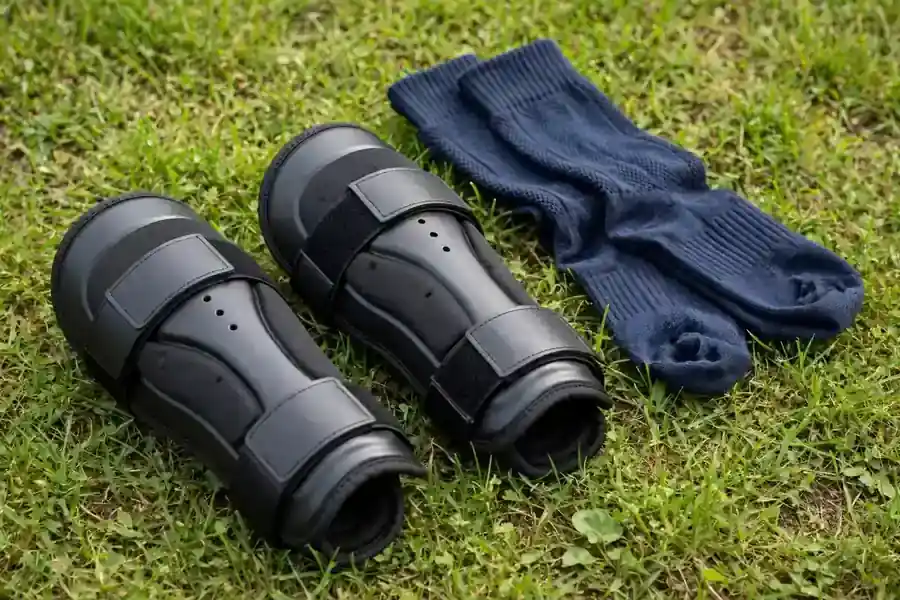
How to Wear Them Correctly
Owning legal guards is only half the job. The rules also dictate how you wear them:
- Guards must be entirely covered by the socks — not peeking out the top. Socks folded down on hot days are an infringement.
- Tape worn over socks must match the sock colour. White tape on red socks is technically an offence.
- They must stay in place. Straps, sleeves or compression undersocks are all fine, as long as the finished look is guard plus matching sock.
Put the guard on first, pull the sock up over it, then add tape or a sleeve if needed. These wearing rules sit alongside the rest of Law 4 compulsory equipment — your footwear has its own requirements, covered in our football boot rules guide, while jewellery is treated very differently: it is completely forbidden, as explained in our jewellery rules in football article.
Referee Checks and Punishments
Before every match the referee inspects players’ equipment, and substitutes are checked before entering the field. If a player has no shin guards, or guards the referee deems unsuitable:
- The referee orders the player to correct the problem.
- If the player cannot or will not comply, they must leave the field at the next stoppage.
- They may return only with the referee’s permission, and only when the ball is out of play.
- Refusing to comply, or sneaking back on without permission, brings a yellow card.
Play is not stopped for equipment issues spotted mid-game — the referee simply instructs the player to leave at the next stoppage.
What If You Lose a Shin Guard During a Match?
The laws anticipate exactly this: a player whose shinguard comes off accidentally must replace it as soon as possible, and no later than the next stoppage. If the player touches the ball or even scores before replacing it, the goal still stands. Sort it out at the next stoppage and play on.
Shin Guards for Kids and Youth Players
The same Law 4 applies to under-8s and World Cup finalists alike, but youth football adds practical layers:
- Fit matters more for children. Oversized guards rotate on small legs and can cause injury. Buy by height and re-check every season.
- Leagues may go further than FIFA. Many youth and school competitions mandate specific guard types. Check local rules before the season.
- Do not copy the pros. Young players see stars wearing tiny guards, but children’s bones are still developing — proper guards are the cheapest injury insurance in the sport.
If your child is just starting, our beginner’s guide to football rules covers everything else they need to know.
The Mini Shin Guard Trend
If guards are compulsory, why do players like Jack Grealish seem to wear almost nothing? Because they wear extremely small guards. Mini guards technically satisfy the law, which sets no minimum size — only “reasonable protection”. Pros choose them for lightness and freedom of movement, and some keep the habit for superstition.
The 2025/26 laws acknowledged the trend directly: mini shinguards are acceptable, but at the player’s own risk. For amateurs and youth players, a properly sized guard remains the smarter choice — protection is the entire point of the rule.
Do Goalkeepers Have to Wear Them?
Yes. Law 4 makes no exception — the five compulsory items apply to all eleven players. Goalkeepers may wear tracksuit bottoms instead of shorts and often choose guards with extra ankle padding, but the requirement is identical.
Real Match Case Study: Jack Grealish and the Tiny Shin Pads
No player illustrates the shin-guard rule better than Jack Grealish. The England and Manchester City winger is instantly recognisable: socks rolled down around his ankles, and shin pads so small they look borrowed from a child. It is not an accident or a fashion statement gone wrong — Grealish has worn tiny guards since his youth days at Aston Villa, a habit born, by his own account, from wearing oversized socks as a boy and keeping the look ever since, part comfort and part superstition.
Here is the remarkable part: it is completely legal. Law 4 demands shin guards of a “suitable material” providing “reasonable protection” — but sets no minimum size. Referees across the Premier League and at major tournaments have inspected Grealish’s equipment and waved him on, because the law gives them no centimetre rule to enforce. The IFAB eventually acknowledged the trend directly in the 2025/26 laws, noting that mini shin guards are acceptable but worn entirely at the player’s own risk.
The other side of the story is darker. In February 2008, Arsenal’s Eduardo da Silva suffered a horrific broken leg from Martin Taylor’s tackle at Birmingham — an injury his standard shin guard could not prevent. Moments like that are why the rule exists at all, and why the Grealish debate splits opinion: purists argue tiny guards defeat the purpose of the law, while others say adults should choose their own risk.
For young players, though, the message from every coach and doctor is the same: do not copy the pros. Children’s bones are still developing, and a properly sized guard is the cheapest injury insurance in football.

Frequently Asked Questions
Do you have to wear shin guards in football?
Yes. Shinguards are one of the five items of compulsory equipment under Law 4. A player without them must leave the field until the problem is corrected.
Can you wear shin guards without socks covering them?
No. The law requires shinguards to be covered entirely by the socks. Folded-down socks exposing the guards are an infringement the referee can order you to fix.
What size shin guards should I buy?
Buy by height: the guard should cover roughly two-thirds of your shin, from below the knee to above the ankle. Guards that slide around or leave the shin exposed fail the “reasonable protection” standard.
Are mini shin guards legal?
Technically, yes. The laws set no minimum size, and the 2025/26 edition notes minis are acceptable but worn at the player’s own risk. A referee can still reject guards offering no real protection.
Can a referee punish you for missing shin guards?
You will not get a straight red card, but you must leave the field until fixed and may only return with permission when the ball is out of play. Refusing to comply, or re-entering without permission, earns a yellow card.
Key Takeaways
- Shin guards are compulsory for every player, including goalkeepers — no exceptions in Law 4.
- They must be a suitable protective material, an appropriate size, and covered entirely by the socks; tape over socks must match the sock colour.
- Referees inspect equipment before kick-off. Missing or unsuitable guards mean leaving the field until fixed; refusal brings a yellow card.
- A guard lost accidentally mid-game must be replaced by the next stoppage — any goal scored before that still counts.
- Mini guards are technically legal but worn at your own risk; youth and amateur players should always choose a proper full-size guard.
Now that your equipment knowledge is complete, keep exploring the laws with our guides here at GameGuidelines — and learn more about the team behind the site on our about us page.
