The Away Goals Rule Explained: What It Was and Why UEFA Abolished It
The away goals rule was a tiebreaker used in two-legged knockout ties: if both teams scored the same number of goals across the two matches, the team that scored more goals away from home advanced to the next round. For over 50 years, it decided some of the most dramatic ties in the Champions League and other European competitions.
But in June 2021, UEFA abolished the away goals rule for all of its club competitions, starting with the 2021/22 season. Since then, ties level on aggregate go to extra time and, if still level, a penalty shootout. In this GameGuidelines guide, we explain exactly how the away goals rule worked, why it was introduced back in 1965, the most famous matches it decided, and why UEFA finally scrapped it.

What Was the Away Goals Rule?
The away goals rule applied to knockout ties played over two legs — one match at each team’s stadium. The winner was first decided by the aggregate score, the total goals from both matches added together. If the aggregate was level, the team that had scored more goals on their opponent’s ground went through.
For example:
- First leg: Arsenal 1–0 Bayern Munich (in London)
- Second leg: Bayern Munich 2–1 Arsenal (in Munich)
- Aggregate: 2–2 — but Arsenal scored 1 away goal to Bayern’s 0, so Arsenal advance
One myth worth clearing up: people often said away goals “counted double.” That was never true. No extra goals were added — away goals simply acted as the tiebreaker when the aggregate was level. If both teams had scored the same number of away goals, the tie went to extra time or penalties, depending on the competition’s rules.
Why Was the Away Goals Rule Introduced?
UEFA introduced the away goals rule in the 1965–66 European Cup Winners’ Cup. It was first used in November 1965, when Budapest Honvéd drew 4–4 on aggregate with Dukla Prague — Honvéd advanced with three away goals to Dukla’s two. The rule later spread to the Fairs Cup (1966–67) and the European Cup, today’s Champions League (1967–68).
It was brought in for two reasons:
- To avoid replay matches at neutral venues. A level aggregate often meant a third deciding match — a logistical headache for clubs and fixture calendars.
- To encourage attacking football away from home. The rule rewarded visiting teams that went for goal instead of defending for a 0–0 draw.
If you are still learning how knockout football works, start with our guide to the basic rules of football before diving deeper.
How the Rule Changed the Way Teams Played
The rule shaped tactics for decades — not always as UEFA intended.
Home teams, especially in first legs, often played cautiously. Managers feared conceding at home because a single away goal for the visitors could decide the entire tie, producing many tense, low-scoring first legs.
Away teams, meanwhile, knew that even one goal on the road could be priceless. A narrow 1–0 away defeat was often considered a decent result, since a single goal in the home return leg could flip the tie.
The rule also created controversy around extra time. Where away goals still counted after extra time, the team playing away in the second leg got an extra 30 minutes to score a “more valuable” away goal — something many fans and coaches felt was deeply unfair.
Why UEFA Abolished the Away Goals Rule
On 24 June 2021, the UEFA Executive Committee abolished the away goals rule in all UEFA club competitions — the Champions League, Europa League, Europa Conference League, Women’s Champions League, and Youth League — from the 2021/22 season, including qualifying rounds. CONMEBOL followed in 2022 and the AFC in 2023–24.
UEFA president Aleksander Čeferin gave several clear reasons:
- It backfired. Instead of encouraging attacking football, the rule “dissuades home teams — especially in first legs — from attacking, because they fear conceding a goal that would give their opponents a crucial advantage.”
- It was unfair in extra time. Čeferin cited “the unfairness, especially in extra time, of obliging the home team to score twice when the away team has scored.”
- Home advantage had shrunk. Since the mid-1970s, home wins fell from 61% to 47% of matches while away wins rose from 19% to 30%, and the home/away goals-per-match gap narrowed sharply. With modern travel and consistent playing styles, scoring away was no longer the hardship it had been in the 1960s.
Former Arsenal manager Arsène Wenger had campaigned against the rule for years, especially after Bayern Munich knocked Arsenal out on away goals in 2012/13.
What Happens Now When a Tie Is Level?
The current system is simple. If two teams are level on aggregate after 180 minutes, the tie goes to 30 minutes of extra time. Away goals count for nothing. If the teams are still level after extra time, a penalty shootout decides who advances.
We have already seen the difference. In the 2023/24 Champions League quarter-final, Manchester City drew 4–4 on aggregate with Real Madrid after scoring three goals at the Bernabéu. Under the old rule, those away goals would have sent City through — instead, the tie went to a shootout, which City lost. During extra time, all the normal Laws of the Game apply, including restarts such as the corner kick.
Famous Ties Decided by Away Goals
The rule produced some unforgettable drama:
- Tottenham 3–3 Ajax (2019, Champions League semi-final): Lucas Moura’s 96th-minute hat-trick goal in Amsterdam levelled the tie and sent Spurs to their first-ever final.
- Manchester City 4–4 Tottenham (2019, quarter-final): Weeks earlier, Spurs had knocked out City in one of the wildest ties in the competition’s history.
- Roma 4–4 Barcelona (2018, quarter-final): After losing 4–1 in Barcelona, Roma won 3–0 in Rome to complete a stunning comeback.
- PSG 3–3 Manchester United (2019, round of 16): Marcus Rashford’s 94th-minute penalty in Paris sent United through after a 2–0 home defeat.
- Chelsea 1–1 Barcelona (2009, semi-final): Andrés Iniesta’s 93rd-minute strike at Stamford Bridge sent Barcelona to the final.
- AC Milan 1–1 Inter (2003, semi-final): A famous quirk — both legs were played at the shared San Siro, yet the rule still applied and sent Milan through.
- The last one: PSG’s 3–3 aggregate win over Bayern Munich in the 2020/21 quarter-final was the final tie ever decided by away goals in the Champions League.

Does the Away Goals Rule Still Exist Anywhere?
The rule has now disappeared from almost all top-level football. UEFA abolished it in 2021, CONMEBOL in 2022, and the AFC in 2023–24. England’s League Cup had already dropped it in the 2018/19 season, and Major League Soccer used it only between 2014 and 2018.
A small number of lower-league and domestic cup competitions may still use the rule or a variation of it, so always check the specific competition’s regulations. For the official framework of the sport, the IFAB Laws of the Game are the definitive reference.
Real Match Case Study: The Night the Away Goals Rule Broke Chelsea’s Heart
Of all the ties the away goals rule ever decided, none was more dramatic — or more controversial — than Chelsea vs Barcelona in the 2009 Champions League semifinal. The first leg at Camp Nou finished 0–0, a defensive masterclass by Guus Hiddink’s Chelsea. In the return at Stamford Bridge on 6 May 2009, Michael Essien smashed a stunning ninth-minute volley to put Chelsea 1–0 up. For 84 minutes, Chelsea defended heroically — and then, in the 93rd minute, Lionel Messi found Andrés Iniesta on the edge of the box, and Iniesta curled the ball into the far corner: 1–1. The tie finished level on aggregate, and Barcelona advanced on away goals — Iniesta’s strike in London outweighing everything Chelsea had done.

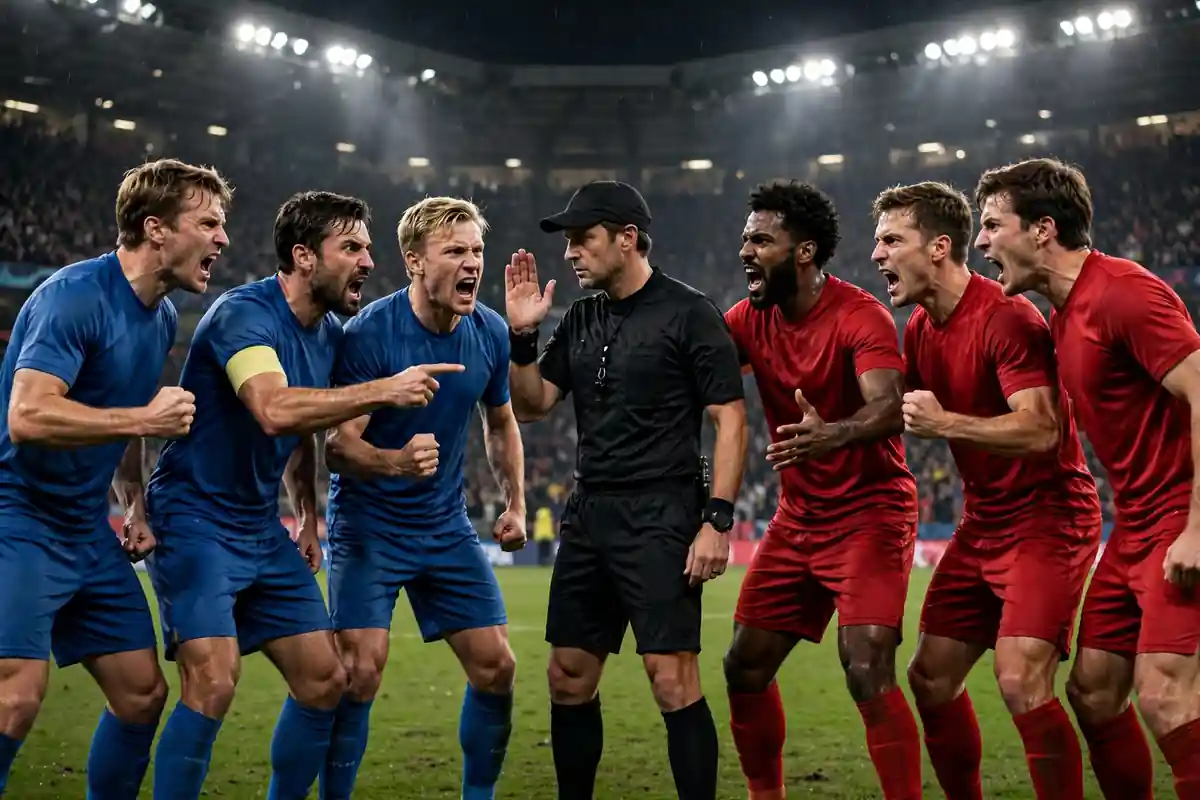
What made the night infamous was not just the rule but the officiating. Norwegian referee Tom Henning Øvrebø turned down four strong Chelsea penalty appeals — for handballs by Gerard Piqué and Samuel Eto’o and fouls on Florent Malouda and Didier Drogba. At full time, Michael Ballack sprinted half the pitch to confront Øvrebø, and a furious Drogba shouted into a television camera. Barcelona went on to beat Manchester United in the Rome final and complete the treble. For Chelsea fans, it remains the ultimate cruelty of the away goals era: 180 minutes of near-perfect football undone by a single away strike — and a referee who would later admit he had not had his best night. When UEFA abolished the rule twelve years later, nights like this were exactly what Aleksander Čeferin had in mind: a tie decided not by who played better over two legs, but by where the goals happened to be scored.
Frequently Asked Questions
When was the away goals rule abolished?
UEFA announced it on 24 June 2021, removing it from all UEFA club competitions from the 2021/22 season (including qualifying). CONMEBOL followed in 2022, the AFC in 2023–24.
What happens now if a Champions League tie is level on aggregate?
The tie goes to 30 minutes of extra time after the second leg. If the teams are still level, a penalty shootout decides the winner. Away goals carry no extra weight at any stage.
Did away goals really “count double”?
No — that was a popular myth. Away goals were never doubled or added to a team’s score. They were simply the first tiebreaker when the aggregate was level: the team with more goals scored away from home advanced.
Why did the rule make home teams play defensively?
Because conceding at home was so costly — one away goal for the visitors could decide the whole tie. Home managers, especially in first legs, often refused to attack freely. UEFA concluded the rule was producing the opposite of the attacking football it was designed to encourage.
What was the last Champions League tie decided by away goals?
PSG’s 3–3 aggregate win over Bayern Munich in the 2020/21 quarter-final — 3–2 in Munich, 0–1 at home — just months before the rule was abolished.
Conclusion
The away goals rule was one of football’s most debated ideas: introduced in 1965 to avoid replays and reward brave away performances, it ended up punishing attacking football and deciding ties in ways that felt unjust. Its abolition in 2021 closed a 56-year chapter — level on aggregate now means extra time, then penalties.
Understanding retired rules like this one makes the modern game easier to follow. At GameGuidelines, our team explains every law of football in plain, simple language — explore our guides and never feel confused by a referee’s decision again.
